
Mode breakdown
Why the XL matters more for setup style than for pure capability
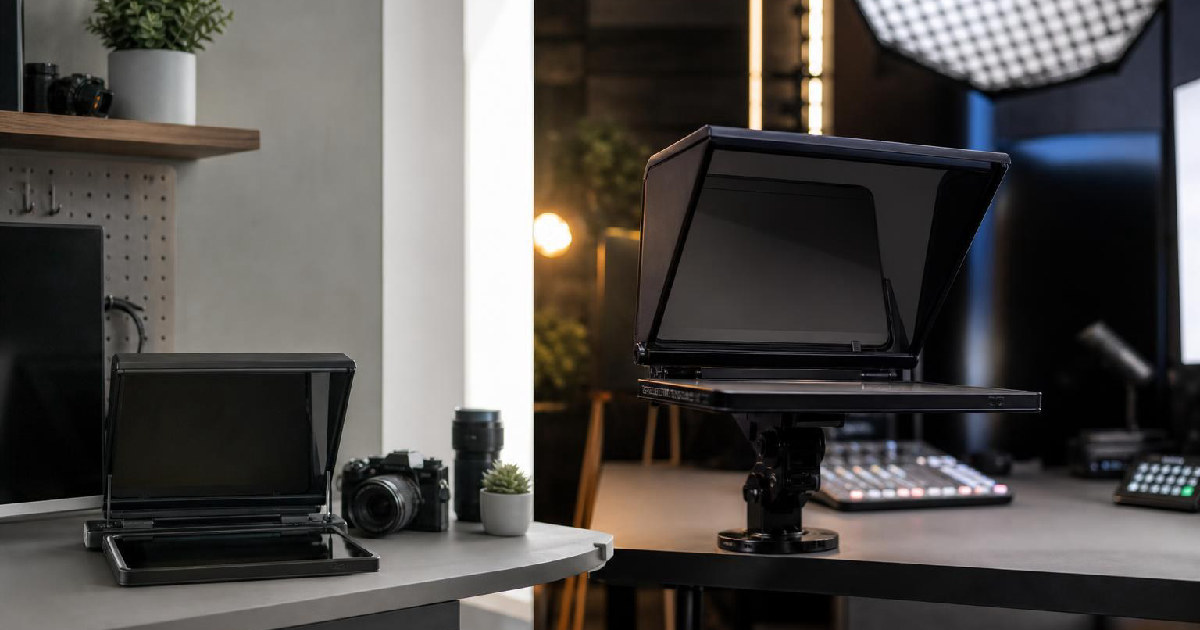
EposVox’s comparison of the Elgato Prompter XL and the original Prompter lands on a simple practical point: the bigger model is not automatically the better one. The real question is not whether the XL is larger. It is whether your space, camera placement, and workflow can take advantage of that size without creating new problems. In the video, that distinction shows up quickly. The XL gives you a much bigger screen and a more substantial physical footprint, but it does not magically solve the physics that limit how wide a lens can go or how close a desk setup can sit to a monitor.
That is the useful frame for this review. The XL is best understood as a teleprompter for more stationary, more spread-out setups. If you are working farther from camera, hosting interviews, or building a semi-permanent studio with room to breathe, the bigger format starts to make sense. If you are trying to keep a desk clean, compact, and visually unobtrusive, the added size can feel like a tax rather than an upgrade.
What the bigger screen changes and what it does not
The XL’s main appeal is obvious as soon as EposVox compares it to the original Prompter: visibility. The larger display is easier to work with when the camera sits farther away or when more than one person needs to read or see what is on screen. That is where the bigger model earns its keep. It also comes with a top rail for cold shoe accessories, which gives it more flexibility for adding a microphone or other gear, at least in theory.
But the XL does not remove the limits that come with teleprompter glass and camera placement. EposVox is blunt about the fact that the wider version still hits a ceiling when it comes to lens angle. The glass angle and the geometry of the whole setup still matter. In other words, the XL is not a shortcut to a dramatically wider field of view. If the hope was that a larger unit would open up teleprompter use for every lens and every desk, the video makes clear that is not how it works.
He also points out something easy to miss in product discussions: the difference between useful and merely larger. The original Prompter remains appealing because it is compact enough to blend into a setup. The XL is more visible by nature. That is not a flaw by itself, but it does mean the choice is tied to your environment. A teleprompter that looks fine in a big, treated studio can feel intrusive on a crowded desk.
The hidden cost of size: mounting, weight, and desk clutter
This is where the video gets most valuable. EposVox spends a lot of time on the physical inconvenience of the XL, and that emphasis is earned. Bigger teleprompter hardware does not just mean more screen area. It means more weight, more stress on mounting points, and more room taken up in front of the camera and monitor.
In his desk setup, the XL creates a chain reaction. The original Prompter fits neatly on a mount. The XL pushes the weight farther out, which forces extra support and makes the whole arrangement more annoying to stabilize. He also runs into visibility issues because the XL blocks part of the display he normally uses. That is not an abstract complaint. It is the kind of thing that decides whether a setup is pleasant to use every day or becomes something you tolerate only when necessary.
The video also shows a second, less obvious tradeoff: front-end camera mounting gets more complicated as the teleprompter grows. Plates, lens rings, filters, and lens clearance all become part of the equation. The larger model may give you more room in one respect, but it can also create a tighter fit in another. EposVox’s point is not that the XL is badly designed. It is that a bigger rig always asks more from the rest of the studio.
Where third-party mounts and accessories actually help
One of the strongest sections of the video is not about the Elgato hardware itself, but about the ecosystem around it. EposVox highlights 3D-printed mounting and adapter solutions from Nackers that solve some of the real annoyances he runs into with the Prompter and the XL. That includes better mounting flexibility, support for different camera sizes, cable management, and a privacy-style rear curtain that helps control light.
This matters because it turns the XL from a fixed product into part of a larger workflow. Out of the box, the XL gives you the basic structure. With accessory parts, it becomes much easier to adapt to specific cameras and camera bodies, especially when the stock plate is not quite enough. EposVox’s enthusiasm here is not about novelty. It is about making an otherwise awkward fit less annoying to live with.
That said, the video does not pretend accessories erase the core tradeoff. They improve compatibility and reduce friction, but they do not change the fact that the XL is still a large object sitting in front of your camera and monitor. The accessories help the tool work better; they do not change what the tool is.
Who should choose the XL, and who should stay smaller
By the end of the video, EposVox has basically drawn a line between two kinds of users. If you are building a bigger, more fixed studio, the Prompter XL starts to look very reasonable. It can support farther camera positions, bigger framing, and use cases where you need a clear teleprompting surface that is easy to read at a distance. It also makes sense for multi-person setups, interview environments, and desk-based streaming or calls where you want to maintain eye contact without adding another monitor.
If you are working closer to the camera, moving gear around often, or trying to keep the setup visually quiet, the original Prompter still sounds like the smarter buy. EposVox clearly likes the XL, but he also lands on the idea that the smaller version fits his day-to-day work better. The deciding factor is not prestige or screen size. It is whether the device helps the rest of the studio stay cleaner and easier to use.
That is why this comparison works. It does not present the XL as a universal upgrade. It presents it as a more specialized tool with a stronger case in fixed environments than in compact ones. For the right desk or studio, that can be exactly what you want. For everyone else, bigger may simply mean harder to live with.
Recommended next
Products & tools
One Mode Digital Media product and one relevant affiliate recommendation selected for this page.

Buffering… 99%
A bold buffering design for anyone who has spent far too long staring at a progress bar stuck at 99%. With retro loading-screen energy and digital frustration turned into a joke, it’s a perfect fit for streamers, gamers, tech fans, and chronically impatient internet users.
Artlist
Music, footage and creative assets for video-first creators.