

Mode breakdown
Why this comparison landed so hard
Matt Wolfe’s quick reaction video is built around an unusually crowded news day: two frontier-model announcements, both from major labs, both arriving within hours of each other. The practical reason the video matters is simple. Wolfe is not treating these launches as abstract progress reports. He is asking which model actually looks more useful, more affordable, and more likely to change what people can build right now.
His direct answer is pretty clear. Claude Opus 5.5 is the bigger release in his view. It appears to outperform Anthropic’s previous top-tier offering on most of the areas he cares about, while also cutting cost. By contrast, GPT-6-Sol feels like a more incremental update: cheaper and faster, yes, but not the kind of leap that dominates the day.
That framing makes the video useful beyond the headline. It shows how a creator who tracks AI closely separates marketing language from actual product movement. Wolfe looks at benchmarks, but he gives more weight to what people can visibly build with a model and how expensive it is to run at scale.
What Wolfe thinks changed with Claude Opus 5.5
The strongest part of Wolfe’s breakdown is his explanation of why Opus 5.5 stands out. He says Anthropic’s new model appears to beat its own previous best across a wide range of tests, including agentic coding, coding-related benchmarks, knowledge work, computer use, and visual chart recognition. He also notes that Anthropic is positioning the model as faster and cheaper than the older Opus tier.
That combination is the key story. Wolfe’s emphasis is not just that the model is better. It is that the newer model seems to arrive at a better place on the cost-capability curve. In his telling, that matters more than a single leaderboard score because many buyers are not choosing a model in isolation. They are choosing one that can be used repeatedly without making every task expensive.
He also spends time on the cost side, which is where the launch becomes more concrete. Wolfe highlights that Anthropic reduced token pricing compared with the previous Opus tier. He then compares that to the pricing structure of Anthropic’s earlier best model line and uses the contrast to show why the upgrade feels meaningful rather than cosmetic.
The other detail Wolfe returns to is token usage per task. Even though the new model is cheaper per token, it can still use more tokens on a task than a smaller or older model. His point is not that token pricing is irrelevant. It is that cost per task is the cleaner measure for people who care about real usage. That is a useful lens for anyone who has watched model announcements become a blur of percentages and tables.
Why GPT-6-Sol felt more modest
Wolfe is noticeably less excited about the OpenAI release, and he says so plainly. In his view, GPT-6-Sol is a cheaper and faster model, but it does not feel like the same kind of leap as Opus 5.5. He describes the benchmarks as thinner and the launch as more selective in what it shows.
That does not mean he thinks the model is unimportant. It does mean he sees it as more of a marginal improvement than a category shift. He points to a few benchmark comparisons where GPT-6-Sol performs respectably, but he keeps returning to the same contrast: it does not look as strong as Anthropic’s latest release, and it does not clearly overtake the strongest models already in the market.
The pricing changes are still meaningful. Wolfe notes that OpenAI cut the token prices on GPT-6-Sol and GPT-6-Luna compared with the earlier generation. But even here, his tone is measured rather than celebratory. The implication is that price reductions only go so far if the model itself is not clearly resetting expectations.
Wolfe also flags availability as part of the story. He says the models are available in the relevant products for paid users, which makes them usable now rather than theoretical. But because the launch did not produce much early hands-on chatter, he treats the rollout as quieter than Anthropic’s. In a creator’s news round-up, that matters. A model can be technically real and still fail to create momentum if the public examples are sparse.
The demos are what make Opus 5.5 feel different
If the benchmarks explain why the model looks good, the demos explain why Wolfe sounds genuinely impressed. He spends a lot of time on examples shared by other creators and builders, and those examples shape the emotional weight of the video.
The recurring theme is that Opus 5.5 seems especially strong at visual and interactive outputs. Wolfe highlights animations, game-like projects, and browser-friendly or JavaScript-driven builds that look far more polished than the kind of output he associates with earlier generations. He is careful not to overclaim what any one demo proves, but the accumulation of examples clearly matters to him.
That includes animated scenes, a Game Boy-style project, an artistic frame-by-frame animation, a first-person shooter doodle game, a Snake variation, a Dark Souls-inspired project, a flight simulator, and a Mario Maker-style concept. Wolfe’s reaction is not just “this is neat.” It is that the quality bar has moved enough that he would previously have assumed some of these clips were fake or manually produced.
The editorial takeaway here is narrower than the hype around the demos. Wolfe is not saying every user will get studio-grade output on demand. He is saying the public examples show a model that can already handle more ambitious creative and coding tasks than many people would have expected. For readers, that suggests the practical value of frontier models may now be showing up less in chatbot answers and more in generated interfaces, interactive prototypes, and workflow automation.
What creators and developers should take from the split
Wolfe’s comparison ends up being less about brand rivalry and more about decision-making. If you are a developer, the important question is not which launch got the most attention. It is which model gives you the best mix of quality, speed, and cost for the work you actually do.
From the video, the takeaway is fairly direct:
- Claude Opus 5.5 looks like the stronger choice if you care about frontier capability, especially in agentic coding and visually rich demos.
- GPT-6-Sol looks more like a solid efficiency update than a major reset.
- Cost per task is the metric Wolfe trusts most when price enters the discussion, because token-level discounts can hide how much work the model actually burns through.
- The most convincing evidence is not the press release language. It is what people can build and share.
That last point may be the most useful one for readers. Wolfe is watching the same benchmarks everyone else sees, but he keeps returning to public demos and practical cost as his filters. That is a good habit to borrow. A model that looks great on a chart but produces little that people can actually use may matter less than a slightly less glamorous model that saves time and opens up new workflows.
For anyone following AI launches, Wolfe’s hotel-room summary offers a clean way to read the moment: one company appears to have shipped the more consequential update, while the other shipped a cheaper, faster one that still feels secondary by comparison.
Recommended next
Products & tools
One Mode Digital Media product and one relevant affiliate recommendation selected for this page.
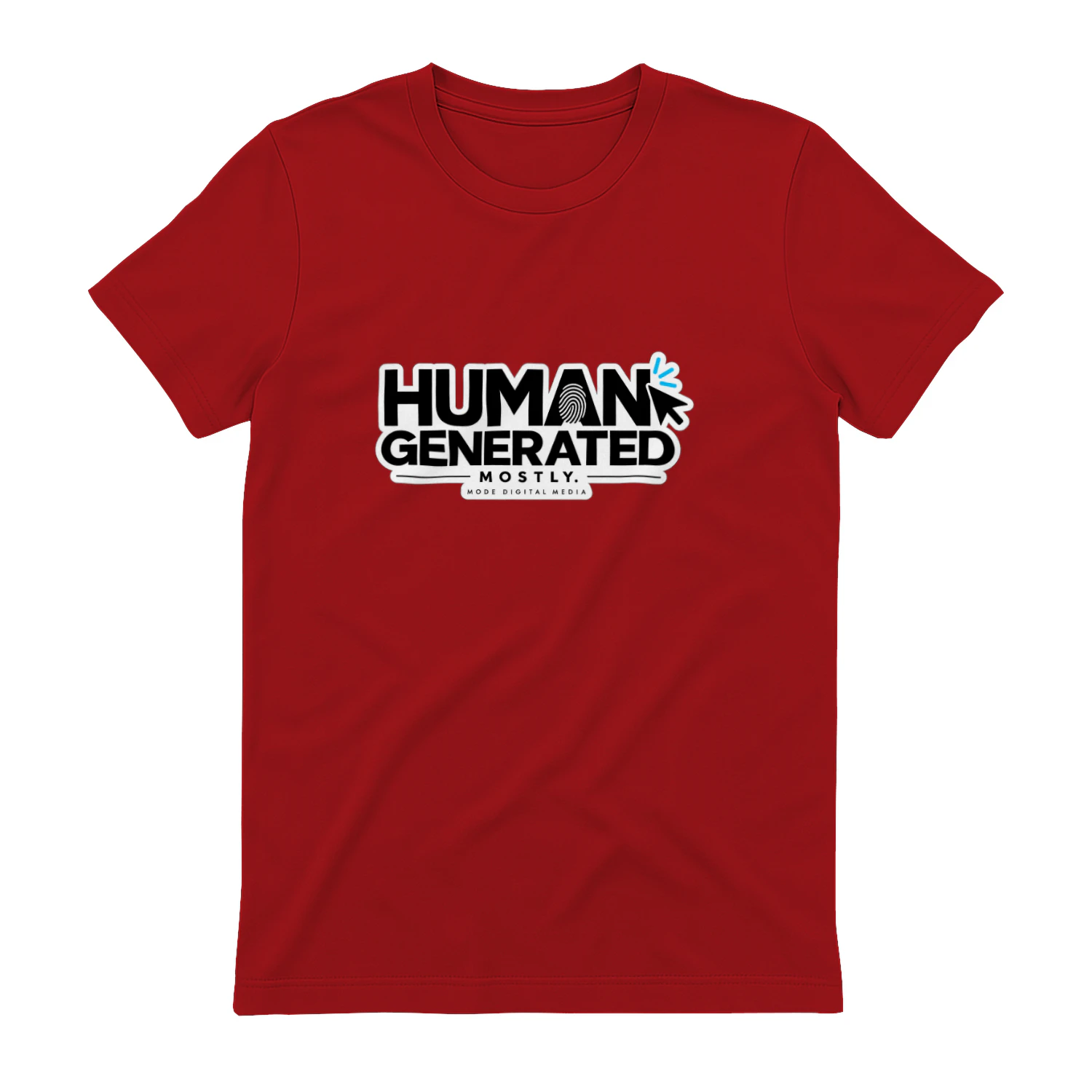
Human Generated. Mostly.
A stripped-down AI-era statement with just enough ambiguity to make the joke land: “Human Generated. Mostly.” It’s a clean piece for creators, writers, designers, developers, and anyone whose workflow now includes a little help from the machines.
Kartra
Marketing automation, funnels, email and digital-business tools in an all-in-one platform.