
Mode breakdown
Why a moving studio needs a different kind of camera
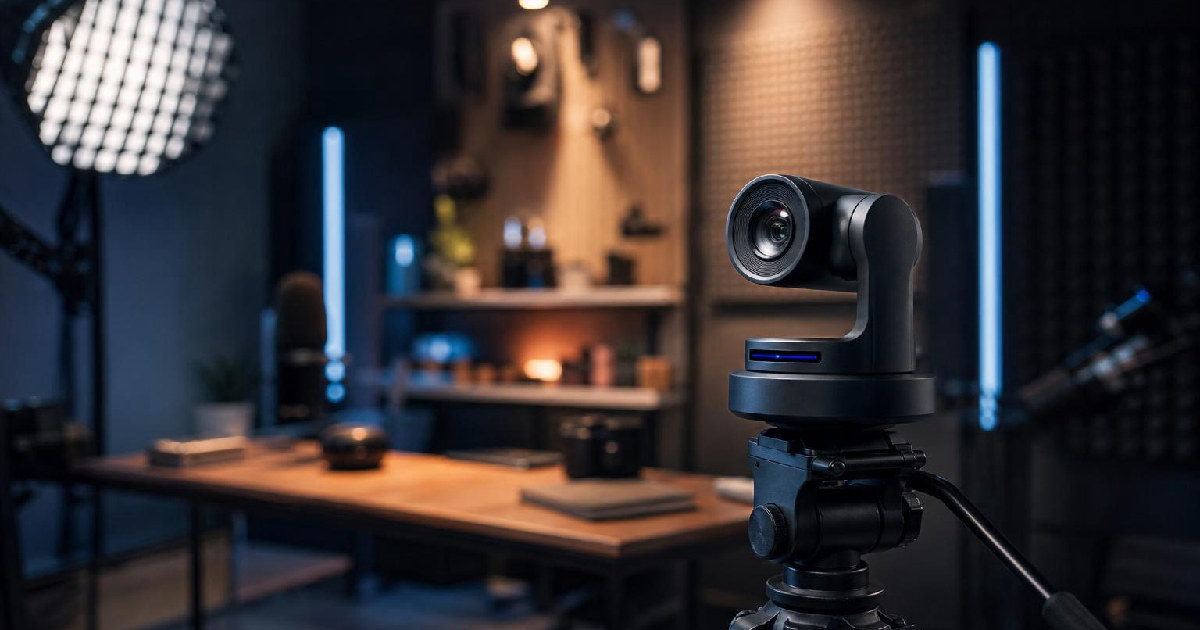
EposVox’s case for the OBSBOT Tail 2 starts with a practical problem: a fixed camera works fine until the way you record stops being fixed. In the video, he describes a studio setup where he wants to walk around, grab b-roll, show objects, and keep talking without resetting a shot every time he shifts position. That is the real reason the Tail 2 feels like a replacement for part of his camera kit. Not because it is trying to be everything, but because it solves a very specific production problem better than a traditional webcam or a mirrorless camera tied to one spot.
His direct takeaway is straightforward. If your filming style depends on movement inside one space, a tracking PTZ camera can simplify the whole session. You do not have to keep returning to a mark or babysit the frame. The camera follows. The setup becomes less about staying inside a box and more about working naturally in the room.
What EposVox keeps coming back to: control plus tracking
The strongest part of the showcase is how much control the Tail 2 gives before and after it tracks. EposVox spends time showing the app-based controls, including pan, tilt, zoom, exposure, color, autofocus, and white balance options. He is not treating this as a locked-down gadget that only does one trick. The appeal is that it can behave like a smart camera when you want it to, then like a more hands-on production tool when you need to make adjustments.
That balance matters for creators who do not want to trade flexibility for convenience. A lot of gear is either simple but limited, or powerful but fussy. EposVox’s reaction suggests the Tail 2 lands in a useful middle ground. The tracking is the headline feature, but the manual exposure and color controls are what make it feel like something you can actually live with in a studio, not just demo for a day.
He also highlights the camera’s ability to track people, animals, and groups, along with a new level of reliability compared with the Tail Air he had used before. In his hands-on test, the camera follows him as he walks around, loses him when he leaves frame, then picks him back up when he returns. He even leaves the room and finds it still following him later, which leads him to note that it does not seem to depend on the app being open every second to remain useful. That kind of behavior is exactly what makes the camera feel less like a novelty and more like a real production tool.
Why the Tail 2 fits some creators better than a webcam
EposVox is pretty clear about the use case. This is not the kind of thing he would buy for a normal desk where he stays seated all day. It makes more sense in a room where the subject moves, points, demonstrates, or grabs gear from different parts of the space. He talks about using it for event coverage, band performances, stage presentations, and similar situations where a camera operator is not always available.
That distinction is the useful one for readers deciding whether the Tail 2 belongs in their setup. A webcam is built to stay put. A mirrorless camera can deliver excellent image quality, but it usually expects a more deliberate support system. The Tail 2 is aimed at a different kind of friction: the friction of being present in your own shot while still needing the camera to keep up.
EposVox also emphasizes the image quality upgrade over the Tail Air, saying the larger glass and sensor make a meaningful difference. He does not frame it as a universal winner for every studio, only as a better fit for the kind of workflow he wants now: moving around freely, recording more often, and reducing the time lost to setup and reset. If you are trying to make a room function like a flexible production space, that is the real value.
The tradeoffs: price, audio, and one missing detail
The video is enthusiastic, but it is not blind to tradeoffs. EposVox says the Tail 2 is expensive and does not pretend otherwise. He also notes that the built-in audio is acceptable but not at the level he wants for his own work. For him, that means the camera solves picture and movement, but audio still needs a separate investment.
He also points out one limitation that matters more than it may sound at first: there is no filter thread on the lens. For a creator who likes to shape the image with lens filters, that is a real constraint. He jokes about potentially rigging a filter thread onto it later, which tells you something about how much he likes the camera despite that annoyance. The point is not that the Tail 2 is incomplete. It is that even a strong fit for one workflow can still leave a few obvious gaps for another.
There is also a broader tradeoff built into the category. A tracking PTZ camera is not trying to replace every other camera on set. It is trying to make one specific kind of production easier: solo or small-team filming in a space where the subject moves and the frame has to keep adapting. If that is not your workflow, the money is probably better spent elsewhere.
The bigger lesson for solo creators
The most useful idea in EposVox’s showcase is not the zoom range or the app controls. It is his broader goal of making his studio feel friction-free. He talks about wanting to record, move around, and keep working without constantly fighting the gear. The Tail 2 fits that plan because it reduces the number of things that can go wrong between pressing record and getting a usable shot.
That is why the video lands as more than a product demo. It is a look at how gear choices change behavior. A fixed camera can keep you in place. A tracking camera can let you work inside the room instead of in front of it. For creators building a studio around tutorials, demos, live-style presentation, or on-camera movement, that difference can matter more than headline specs.
For readers asking whether a tracking PTZ camera makes sense, the answer from this showcase is yes, if the camera’s job is to follow you and keep the workflow simple. If your setup is mostly static, it may be overkill. If you move through a studio, present from multiple angles, or want one camera that can behave like a patient operator, EposVox makes a strong case that the Tail 2 belongs on the short list.
Recommended next
Products & tools
One Mode Digital Media product and one relevant affiliate recommendation selected for this page.

Algorithm Made Me Do It
A bold social-media design built around the excuse we all understand: “The Algorithm Made Me Do It.” With recommendation-feed imagery and digital chaos, it’s made for creators, scrollers, marketers, and anyone whose next click somehow wasn’t entirely their idea.
Artlist
Music, footage and creative assets for video-first creators.