
Mode breakdown
The algorithm is not the real starting point
Thomas Frank opens Jay Clouse’s conversation with a line that sets the tone for everything that follows: he says he knows the literal person who runs the YouTube algorithm and that the system is not some secret, mystical force. His point is not that the platform is simple. It is that creators often make it harder than it needs to be by obsessing over the wrong layer.
That is the cleanest way to read this interview. Frank is not offering a trick to beat the algorithm. He is explaining how he has built a creator business by focusing on audience behavior, platform discoverability, and the type of content a channel is supposed to produce. For anyone trying to grow on YouTube, that is a more useful frame than trying to decode every fluctuation in impressions or every vague rule about “what the algorithm wants.”
Frank’s own history backs up the argument. He did not start on YouTube with a polished creator plan. He started by making video part of his broader publishing work, first through blog content, then through a channel that gradually became serious in 2014. Early on, he assumed the blog audience would just migrate over. It did not. What worked better was a more deliberate approach to where the videos lived and how they reached people.
Why Thomas Frank split Notion into a second channel
The most useful strategic decision in the interview is Frank’s choice to create a second YouTube channel for Notion content instead of folding those videos into the main Thomas Frank channel.
His reasoning is practical. The main channel is built around broader productivity content. Notion videos, by contrast, tend to be more technical and more specific. If he mixed both together, the channel would become harder to read for a general audience. People who came for productivity advice might start to see a feed dominated by niche Notion walkthroughs. That creates a channel identity problem before it creates a growth problem.
He also thinks about the viewer’s experience after the click. If someone lands on a Notion video, he wants the channel itself to feel like the place for that topic. In other words, he wants a searcher or casual viewer to understand immediately: this is the channel to watch if you want Notion education.
That is a subtle but important distinction. A lot of creators talk about “nicheing down” as though the point is simply to make the audience smaller and more targeted. Frank’s version is less abstract. He is designing the channel so a specific viewer knows they are in the right place and can binge without confusion. That is also why he sees the second channel as part of a larger business system, not just a side project. It gives his content clearer categories, which helps the audience and the platform at the same time.
The same logic shows up in his broader business. He separates different kinds of value by function: the main channel, the Notion channel, the blog, the podcast, the templates, and support all have different jobs. He is not trying to force every piece of content to do the same work.
Shorts, discoverability, and the cost of scattered attention
Frank’s view of Shorts is equally grounded in tradeoffs. He is not anti-Shorts. He has tested them, and some have done well. But he does not want to build his whole strategy around short-form video unless it fits the topic and the outcome he wants.
That matters because he sees short-form content as a fragmenting force. If a creator spends heavily on Shorts, the result is often a lot of attention spread across many small pieces instead of concentrated effort on one large, high-value asset. Frank would rather put that time into something substantial, especially for topics like Notion where a single detailed video, template, or resource can support his business for a long time.
At the same time, he is realistic about platform fit. He sees obvious room for Notion content on Shorts or TikTok, especially if the short clip can lead people into a template, webinar, or more substantial resource. In other words, he does not reject short-form as a category. He rejects using it without a clear job.
That is where his “jobs to be done” thinking becomes useful. A piece of content is not just content. It has a purpose. A short Notion clip might be a discovery tool. A long tutorial might be a trust builder. A template walkthrough might be a conversion asset. If a creator treats all three the same, the strategy gets blurry fast.
Frank also pushes back on the idea that a short-form view count is automatically the measure of success. If a creator gets huge views but sends people nowhere useful, the content may have entertained, but it may not have built much of a business. His example is straightforward: if a short is meant to drive people toward a template, then that is the metric that matters.
Free content, paid products, and the job each piece of content has
Frank keeps coming back to a principle that explains a lot of his choices: he likes making things free whenever he can. That preference is not just sentimental. It shapes how he thinks about trust, audience value, and monetization.
He is careful, though, not to confuse “free” with “unpaid.” In his world, free content is often the top of a larger system. It can build trust, create an audience, and eventually support paid products. His own business has moved from sponsorship-heavy income toward more direct products, including templates and other resources tied to his Notion work.
That is also why he is wary of sponsor-driven content when it reduces optionality. Sponsorship can pay well, but it can also make the creator feel locked into a schedule that serves someone else’s campaign timeline. Frank prefers products and assets that keep working after they are published.
The same logic explains why he delayed AdSense for a long time. He was thinking like a blogger first, where the main goal was often to preserve the experience of the page and protect conversions to his newsletter or other resources. It is an older style of creator-business thinking, but it still reveals something useful: monetization choices are not just about income. They change the way content functions.
He gives a good example with his free book and his Skillshare work. He wanted the work to exist in the world, and he was willing to structure the business around that goal. He also talks about how he used Skillshare’s model in a strategic way so that the course could travel through the platform in ways a normal upload could not. The broader point is not the hack itself. It is that he looks for ways to make his work fit the system without flattening it into an ad.
A creator business built around assets, not one-off payouts
What emerges from the interview is a creator business that looks less like a channel and more like an asset stack.
Frank thinks in terms of reusable value. A YouTube video can be an audience-builder. A template can be a product. A podcast can deepen relationships. A second channel can cleanly own a topic. A support person can keep the business from collapsing under its own complexity. He is not chasing novelty for its own sake; he is trying to make each piece do a distinct job.
That is also why his answer to “How do you grow?” is not very flashy. He points to slow accumulation, a few viral moments, and a lot of work that compounds over time. He does not describe a magical formula. He describes a creator who kept refining the system, learned when to separate audiences, and treated platform mechanics as a tool rather than a myth.
For creators who are still trying to make sense of YouTube, that may be the most valuable takeaway in the whole interview. You do not need to solve the algorithm before you start. You need to know who the content is for, what job it is doing, and whether the channel structure actually matches the audience’s expectations.
Recommended next
Products & tools
One Mode Digital Media product and one relevant affiliate recommendation selected for this page.
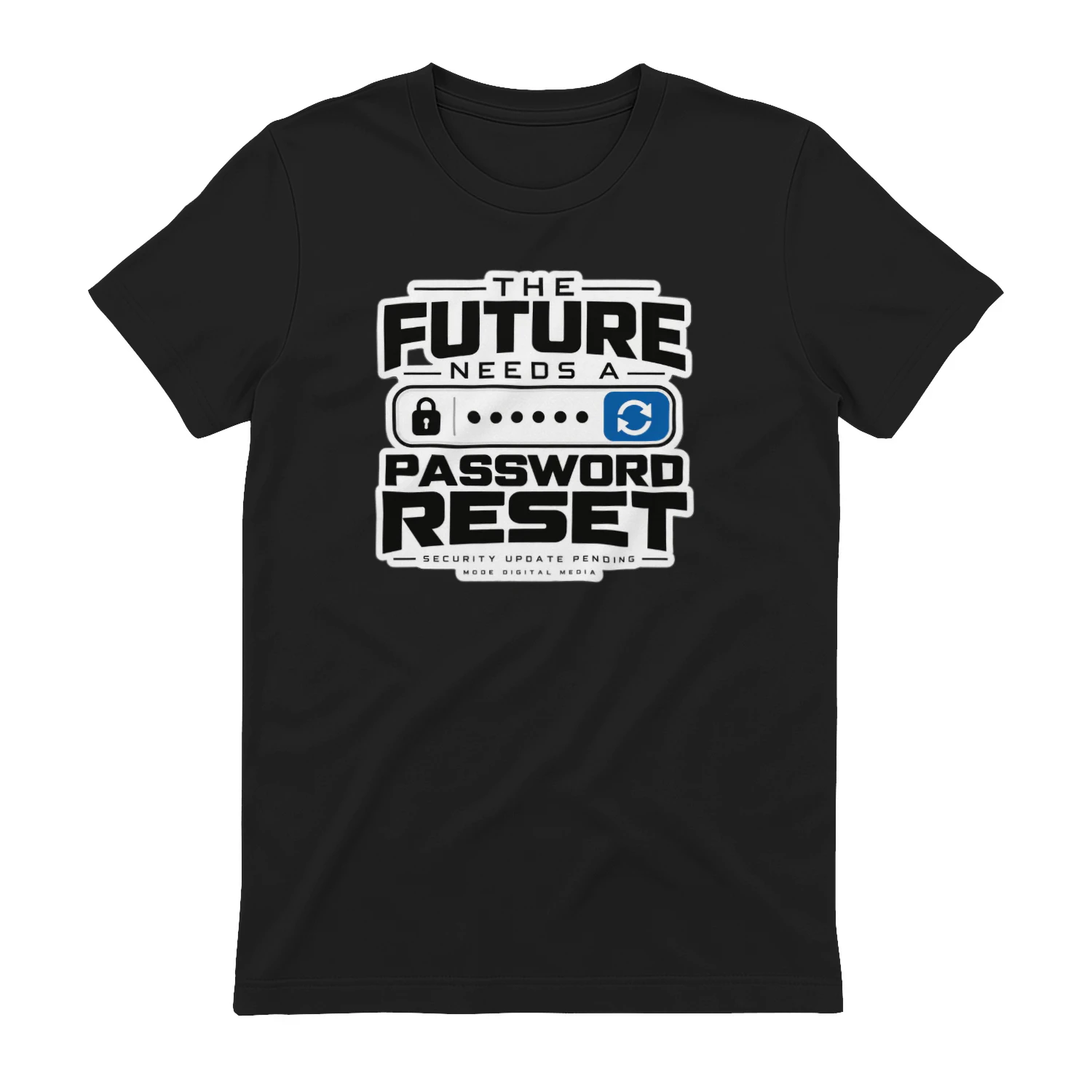
The Future Needs a Password Reset
A clean future-tech design that treats tomorrow like one more account that has forgotten its password. “The Future Needs a Password Reset” blends cybersecurity humor with digital optimism for tech fans, developers, creators, and anyone troubleshooting modern life.
Cerri
Project and work-management software for teams that need clearer planning, ownership and delivery workflows.