

Mode breakdown
Why the blog archive still matters
Income School’s video makes a blunt but useful case for old blog content: it is not useless just because search traffic has changed. The creator’s argument is that a site still carries value as a central hub, a place where you own the content and the structure, even if you are no longer getting the same stream of free search visitors. That shift changes the job of the blog. Instead of relying on search alone, the blog becomes a source library for the rest of your marketing.
That is the direct answer to the problem the video starts with. If your site feels like it is collecting dust, the fix is not to pretend the content never existed. It is to reuse it in ways that still reach people, especially through social platforms where discovery now has to be earned more deliberately.
Exporting the blog into something AI can actually use
The workflow begins with a practical move: download the blog content and make it readable to ChatGPT. Income School walks through doing that from WordPress with a plugin called Print My Blog, then generating a PDF that includes the posts, images, links, author details, and other site content. The point is not printing. It is creating a file format that AI can read cleanly and treat as a knowledge base.
From there, the creator uploads that PDF into a ChatGPT project. That choice is a central part of the method. Rather than building a custom GPT for one narrow job, the video favors a project folder that can hold a larger archive and support multiple uses inside the same content library. In the creator’s framing, that flexibility matters because one archive might need to power Instagram captions today and something else later.
The workflow also scales beyond blogs. The creator notes that the same idea could apply to YouTube transcripts as well, gathered into one or more PDFs and stored in a project. The broader lesson is that the content you have already created can become structured source material instead of scattered leftovers.
What ChatGPT can do with your own writing
Once the archive is inside ChatGPT, the video shows the first real payoff: the model can generate social media ideas based on the categories and topics already present on the site. Income School uses an emergency preparedness category as an example and asks for Instagram posts with photos and captions. The response is not random filler. It is built from the language, themes, and structure of the blog itself.
That distinction is the main reason the workflow works. The creator is not asking AI to invent a topic from nowhere. The source material is already there, and the blog has already done the work of organizing the subject matter. ChatGPT is being used to reshape that material into a different format.
The video then pushes the idea further in a few useful directions:
- It can produce multiple post ideas, not just one caption.
- It can refine results based on feedback, keeping what works and discarding what does not.
- It can suggest branded image concepts to match a visual style.
- It can generate reel ideas and even scripts for short videos.
That last part is especially practical for creators who do not want to build a full video strategy from scratch. Income School shows how a simple blog topic can become a 30-second script with a clear hook, a few shots, and a closing line. The resulting structure is lightweight enough to record on a phone, but still organized enough to feel intentional.
Where the workflow helps most: captions, reels, and cleanup
The strongest use cases in the video fall into three buckets.
First, it helps with social posts. If you already wrote a helpful blog post, ChatGPT can turn that topic into a caption, a carousel concept, or a branded visual post. That means your blog archive becomes a source of ongoing distribution instead of a static library.
Second, it helps with short-form video planning. The creator does not suggest handing over the entire video process to AI. Instead, the workflow is used to generate ideas and scripts that a person can record quickly. That keeps the human creator in the loop while removing some of the blank-page work.
Third, it helps with content consolidation. Income School points out that older blogs often contain multiple posts that are individually weak but collectively useful. In that case, AI can help identify related pieces and draft a stronger combined post. The creator also flags the need to redirect old URLs rather than leave broken paths behind, which is the sort of housekeeping many site owners ignore until it becomes a problem.
That is probably the most editorially useful part of the video. The workflow is not framed as a trick for squeezing more posts out of thin air. It is framed as a way to clean up and reuse what already exists.
Using AI as an editor for your own material, not a substitute for judgment
Income School is careful about where the line is. The creator says the problem is not AI itself. The problem is using it to produce material you do not understand and cannot check. In this workflow, ChatGPT is only allowed to work from the creator’s own writing. That keeps the output anchored in something real.
This is where the method has real value for bloggers. It preserves authorship while speeding up the repetitive parts of repackaging content. You still have to decide what gets published, what gets edited, and what gets cut. You still have to judge whether an idea fits your audience. And you still have to clean up the structure before sending anyone to an old or merged post.
For creators staring at an archive of posts they no longer promote, the video offers a simple recommendation: do not treat that content as dead. Export it. Organize it. Feed it into a system that can help you turn one piece of writing into several new distribution paths.
That approach will not replace a real content strategy. It does, however, give a blog a second life that does not depend entirely on search.
Recommended next
Products & tools
One Mode Digital Media product and one relevant affiliate recommendation selected for this page.
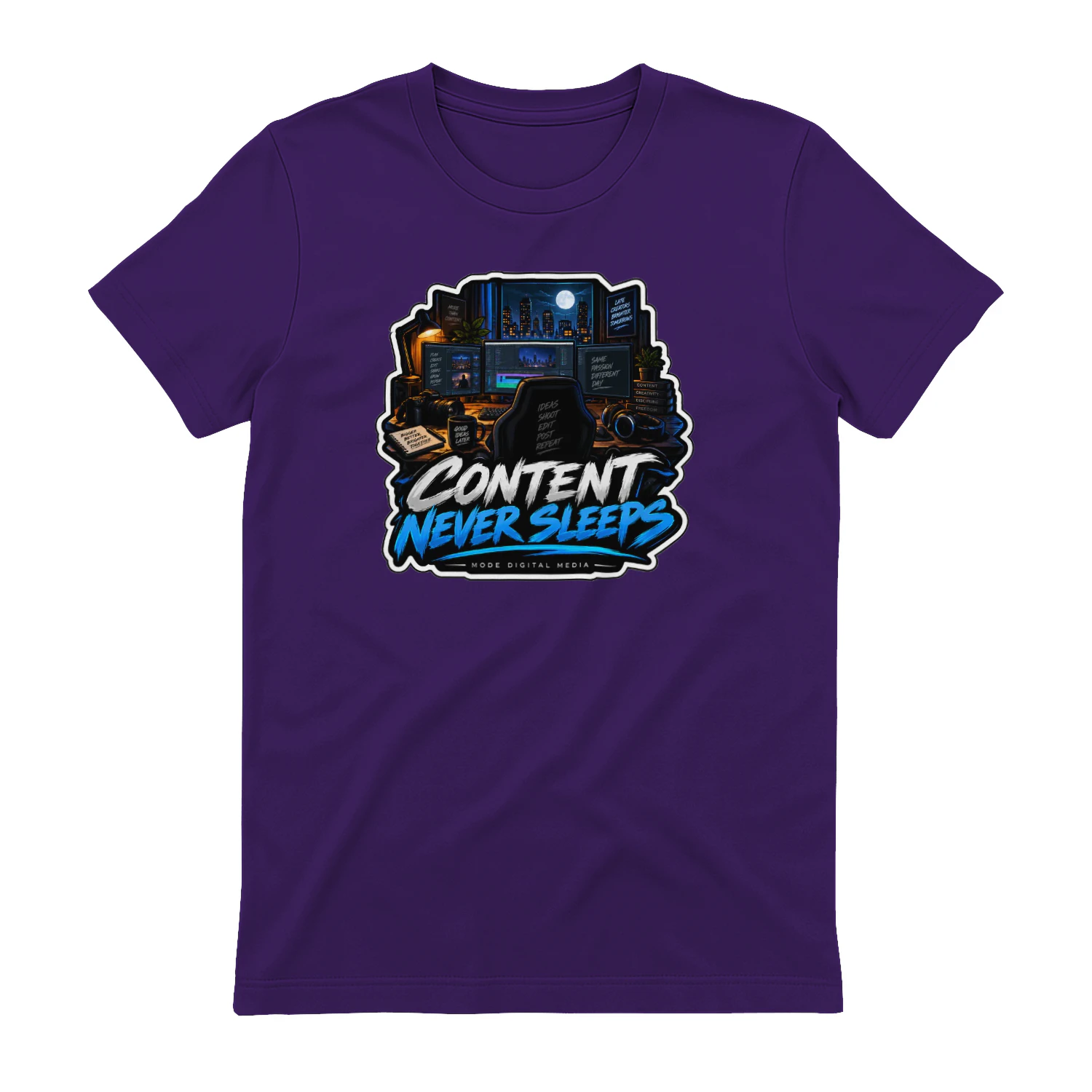
Content Never Sleeps
A late-night creator design inspired by glowing monitors, editing timelines, camera gear, and the work that keeps going after everyone else logs off. “Content Never Sleeps” is made for creators, editors, streamers, marketers, and anyone who has finished a project long after midnight.
Cerri
Project and work-management software for teams that need clearer planning, ownership and delivery workflows.