
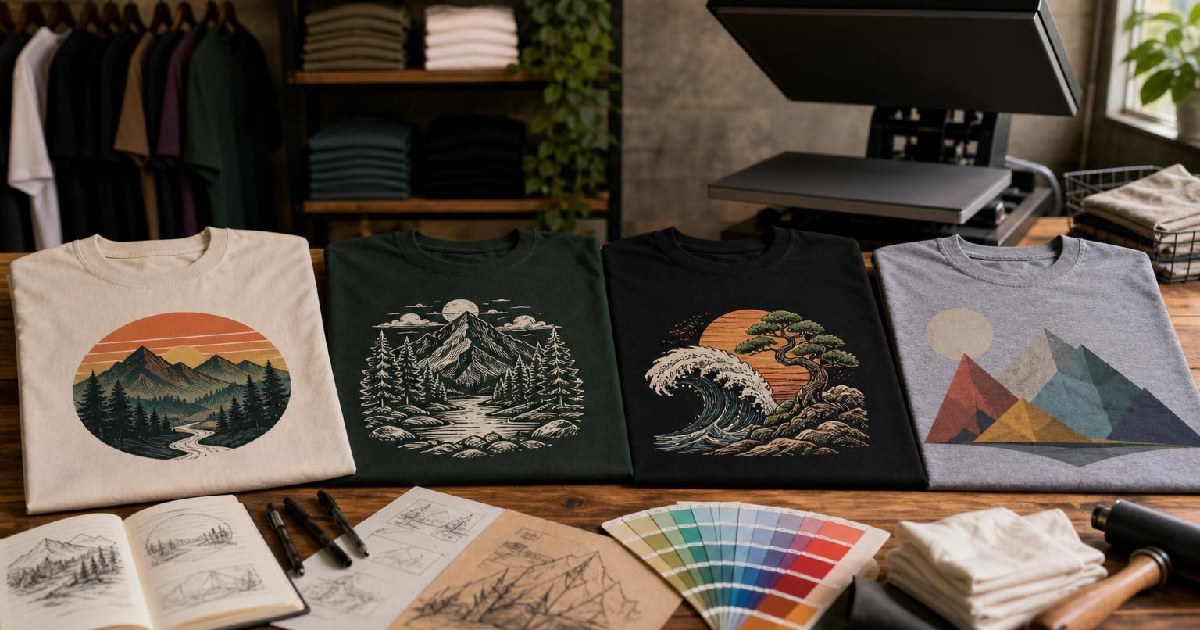
Mode breakdown
Why these four Kittl styles are worth testing
Detour Shirts’ latest Kittl walkthrough is useful because it asks a practical question instead of a vague one: which AI styles actually help when you are trying to make t-shirt art without wasting credits? The creator tests four styles—psychedelic tattoo, vintage travel poster, encapsulated geometry, and good vibes—and keeps the focus on what each style produces, how much cleanup it needs, and whether the result feels usable for print on demand.
The short answer is that these styles are not equal. Two of them feel close to ready for apparel work right away. One is more niche but still useful if you understand its limits. One is fun, but less predictable if your goal is a clean shirt graphic. That mix is the real value of the video: it shows how style choice shapes the amount of work you will need later.
Detour Shirts also uses very simple prompts on purpose. That matters because it lets you see the style doing most of the work. Instead of overloading the prompt with instructions, the creator checks what Kittl adds on its own, how it handles text, and whether the composition fits a shirt layout. If you work in print on demand, that is the kind of test that saves time.
Psychedelic tattoo: the strongest all-around t-shirt option
Of the four styles, psychedelic tattoo comes across as the clearest winner. The creator uses it with a simple prompt for a growling tiger with roses and leaves, then tries another version with the phrase “tattoos are trashy” plus flowers and daggers. In both cases, the style gives back something colorful, bold, and visually dense in a way that feels ready for apparel.
What makes it stand out is the balance between structure and flair. The art has a tattoo-like backbone, but it also introduces color gradients and a more playful feel. That combination makes the output look less flat than a strict vector design. The creator points out that it is not a true vector file, even though it can be vectorized afterward. For shirt makers, that means you may still need the usual cleanup steps: upscale it, remove the background, and make sure the final art sits well on the garment color you want.
That workflow is still manageable. In fact, the creator’s point is that this style already gives you something that feels close to a finished concept. The tiger example, especially, looks like it could move straight into a design queue with minimal adjustment. The Las Vegas mashup test pushes the style further by layering in more objects, and the result still holds together. That is a good sign if you like building designs around niche themes, symbols, or city-specific ideas.
For readers building apparel around a specific audience, that kind of flexibility matters. You are not just looking for a pretty image. You are looking for a style that can hold different subjects without collapsing into visual noise. Psychedelic tattoo appears to do that better than the other options in this test.
Vintage travel poster: simple prompts with polished results
Vintage travel poster is the other style that feels immediately useful, especially if your shirts lean toward destination art, souvenir-style graphics, or lifestyle travel themes. Detour Shirts keeps the prompt extremely simple here—just a place name like Santorini, Greece—and Kittl generates a poster-like image with the location built in.
That built-in text is both a strength and a limitation. The strength is obvious: you do not have to wrangle the layout from scratch. The style seems designed to produce a finished poster feel, and it shows. The imagery has a polished, graphic quality that can work well on shirts as long as the composition fits your target use. The limitation is that it almost always adds words, even when the creator tries to avoid them. If you want a purely graphic image, this is not the easiest style to control.
Still, the creator’s treatment of the results is practical, not dismissive. They suggest cropping, removing the background on one version, or remixing if the text placement needs adjusting. That is the right way to think about a style like this: not as a one-click final asset, but as a template for a specific look. If your niche supports travel or city-based apparel, the style gives you a fast path to something visually coherent.
The creator also tests a few other location prompts and notes that the artwork remains strong even when the output needs editing. That suggests the style is less about perfect prompt control and more about consistent mood. For sellers who want a recognizable travel-poster aesthetic, that can be enough.
Encapsulated geometry and good vibes: useful, but each has a catch
The two remaining styles sit in a more mixed category. They are worth testing, but they are not as straightforward for shirt production.
Encapsulated geometry produces clean, vector-like line art with a strong shape-first feel. The creator uses prompts like a sun, moon, stars, and a scorpion, and later a king of hearts in a hexagon, then falls leaves with the phrase “fall is here.” The output has a neat graphic quality, and because it is actual vector art, it can be edited more directly than the other styles. That is a genuine advantage.
But the catch is the format. The creator keeps getting tall rectangular compositions that do not naturally fit a standard t-shirt graphic. That does not make the style unusable, but it does mean you may have to work around the canvas shape instead of expecting the style to match shirt proportions on its own. The creator even suggests that the format might suit other uses, like bookmarks or hat designs, better than a front-and-center shirt print.
Good vibes is the most playful of the four, and the most mixed. The style has a retro, chalky, hand-drawn feel, and when the creator gives it both a subject and words, it can produce fun, highly stylized graphics. The 80s boom box example and the duck-in- lederhosen-style prompt show that it can follow a creative direction and add personality.
The problem is that it tends to add extra words or decorative elements on its own. That makes it entertaining, but also harder to control. If you want a design that is tight and minimal, good vibes may need more cleanup than the creator would like. If you are building around a retro or novelty niche, though, it could be a smart place to experiment.
What this test says about using AI styles for POD
The real takeaway from Detour Shirts’ test is not that one Kittl style is “best” in the abstract. It is that different styles solve different problems. Psychedelic tattoo is the most versatile if you want shirt-ready art that still has punch. Vintage travel poster is ideal if you want a polished destination look and do not mind text baked into the result. Encapsulated geometry is attractive if your niche fits a tall, graphic treatment and you are comfortable editing. Good vibes is the most expressive, but also the least predictable.
That is a useful framework for print-on-demand sellers. Instead of asking whether Kittl can make designs, the better question is whether the style you choose matches the kind of shirt you want to sell. Some styles are better as starting points. Others are close to final art. Some are better for niche experiments than for volume production.
Detour Shirts’ approach also highlights a practical habit: test with simple prompts before you use credits on more complex ideas. That makes it easier to see how much the style contributes on its own and how much cleanup you will need afterward. For POD work, that can save time as well as prevent you from forcing a style into a job it was never meant to do.
If you want to compare styles with your own niche in mind, this is the kind of video worth bookmarking. It does not promise magic. It shows you what the tool actually does.
Recommended next
Products & tools
One Mode Digital Media product and one relevant affiliate recommendation selected for this page.
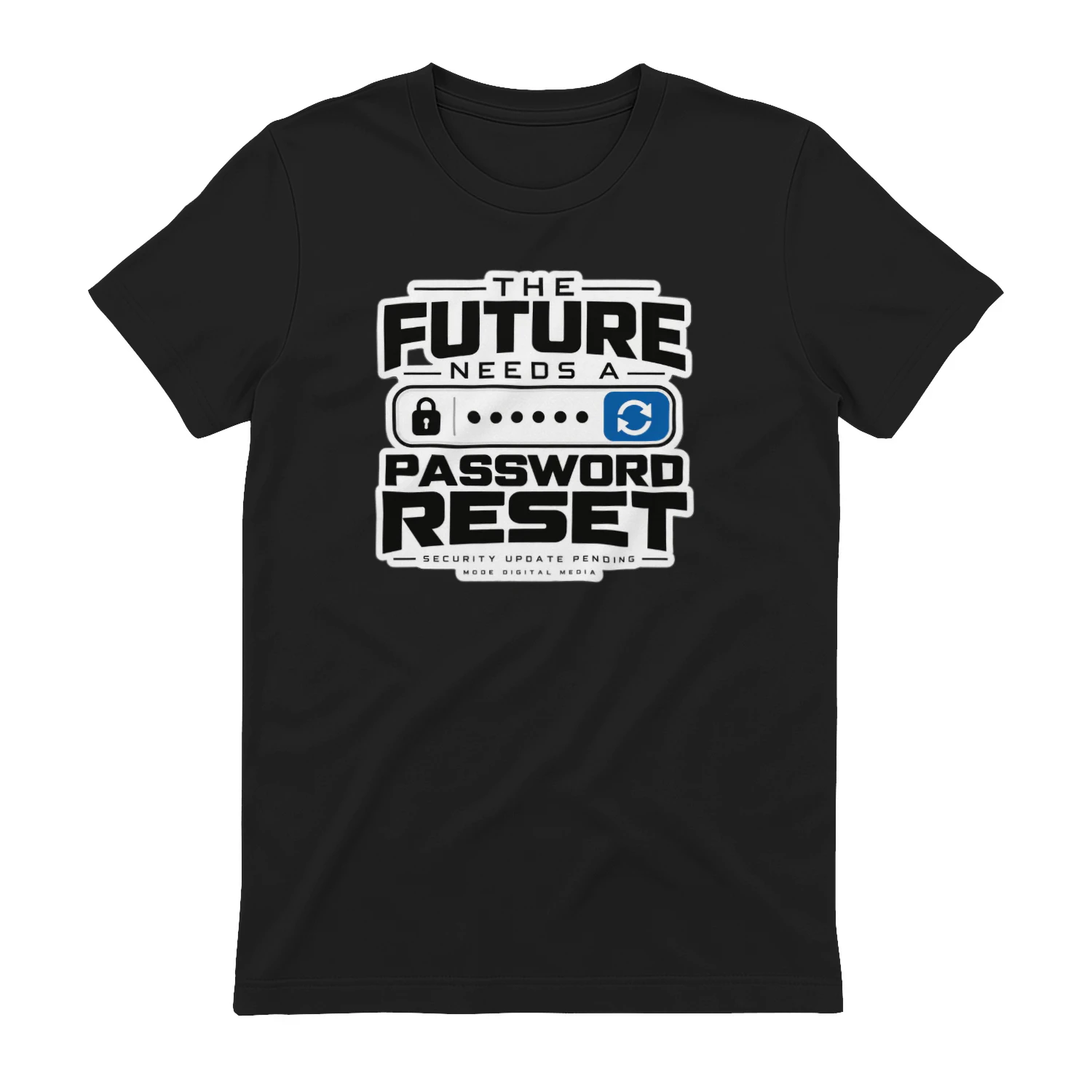
The Future Needs a Password Reset
A clean future-tech design that treats tomorrow like one more account that has forgotten its password. “The Future Needs a Password Reset” blends cybersecurity humor with digital optimism for tech fans, developers, creators, and anyone troubleshooting modern life.
Artlist
Music, footage and creative assets for video-first creators.