

Mode breakdown
Why Dara Denney treats Claude Cowork like part of the job
Dara Denney’s video is not really about a handful of clever AI prompts. It is about a different way to organize agency work. Her setup uses Claude Cowork as an active layer inside the day, not as a separate place to go when you need an answer. That is the core idea running through the walkthrough: if a team is producing more than 1,000 creatives a month, the value of AI shows up less in novelty and more in how well it keeps the work moving.
The direct answer is simple. Denney uses Claude Cowork for daily briefs, client monitoring, weekly creative delivery reports, internal strategy reporting, an agency leaderboard, and ad library analysis. She keeps returning to the same theme: AI is most useful when it is embedded in the workflow, connected to the tools the team already uses, and allowed to handle repeatable admin so people can spend more time on judgment.
That makes this video useful for creative strategists, agency owners, and performance marketers who are trying to move past one-off prompting. Denney is not presenting AI as a replacement for strategy. She is showing how it can reduce the drag that usually sits around strategy: checking channels, collecting updates, formatting reporting, and stitching together what changed.
The briefing systems that keep client work from slipping
The first category of automations in the video is the most immediately practical. Denney starts with a daily sweep that pings her in Slack every morning. The brief is organized into buckets like urgent, needs reply, and watch, which makes the output easier to act on quickly. The important part is not that the brief exists. It is that it gives her a way to see what needs attention without manually scanning every thread.
She also points out a detail that matters for anyone trying to copy the setup: the connectors have to be in place. For this workflow, she calls out Gmail and Slack, and she notes that project tools like Asana, Notion, or ClickUp can be part of the system too. In other words, the brief is only as useful as the data it can reach.
There is a second layer to the setup that feels even more operationally useful. Denney describes a client watchdog channel that scans the workspace every few hours and flags client conversations that have not been answered within a set window. That solves a common agency problem: a founder or strategist may not be in every day-to-day thread, but client health still needs oversight. The value here is not speed for its own sake. It is visibility.
She also shows a simple but smart pattern for scheduling. Because she was filming in England, she had to adjust the timing of the morning brief so it hit at the right local hour. That is a small detail, but it reflects the real shape of automation work: once a system is live, it still needs maintenance. The automation saves time, but it does not erase the need to check whether the assumptions behind it still match real life.
Reporting that turns creative performance into something a team can act on
Where Denney’s workflow gets more interesting is in reporting. She describes weekly creative delivery reports that pull from the team’s work in Notion and Slack, then summarize how the agency is pacing against monthly client deliverables. She uses different versions of the report on Friday and Monday so the team can get both a quick status check and a fuller follow-up.
That split is smart because it treats reporting as an operational rhythm rather than a one-size-fits-all dashboard. Friday gives her a bird’s-eye view of whether a client is on pace. Monday gives her the fuller readout, including the ability to click through and inspect what was actually delivered. The report is not just there to summarize the week; it is there to guide the next decision.
Denney also shows an internal creative strategy report that highlights where the money is going, whether a new creative has moved up, and what learnings seem to matter most. She notes that this report uses Motion MCP or, alternatively, Meta Ads MCP if Motion is not available. Again, the point is less about the specific tool name than the workflow shape: the report gathers ad performance and turns it into something the team can use in conversation.
The most striking example in this section is her agency leaderboard. She says it tracks ad spend across clients and breaks it down by creative strategist and video editor. It also helps her see top concepts across the agency and compare impact across the team. Denney is careful to frame it as a tool for celebration and healthy competition, not public shaming. That is the right lens. Used well, a leaderboard is a management tool. Used badly, it becomes noise or pressure without context.
There is also a tradeoff here. Reports can create clarity, but they can also create a false sense of certainty if the underlying data is incomplete or stale. Denney’s answer is to give the model more time, ask it to double-check its work, and tell it to surface errors when it finds them. That does not eliminate the need for human review, but it does make the system more trustworthy than a one-pass summary.
What ad library analysis looks like when it is tied to workflow
Denney’s update to her ad library analysis is one of the strongest parts of the video because it shows how workflow design can improve output quality. In her earlier approach, she had run into problems where Claude was not reliably reading the material the way she wanted. Her fix was to use Motion MCP, which she says can inspect videos frame by frame rather than relying only on transcripts.
That matters because her analysis is built around creative patterns, not just text. She looks at creative velocity, average lifespan, format concentration, messaging drivers, recurring phrases, and audience personas. On the Grounds example she references, she calls out a high volume of ads, a strong emphasis on one style of format, and messaging built around scientific proof points like gut health and ingredients. She also notes that the model pulled out repeated objection-handling language and audience segments.
This is where the practical value of the workflow becomes obvious. Denney is not using AI to invent a strategy from scratch. She is using it to accelerate a strategist’s review process: identify patterns, surface what repeats, and organize the findings so a human can decide what matters. That is a much stronger use case than asking an assistant to “analyze” a brand in the abstract.
She also makes an important editorial point when she talks about the missing family story in those ads. She says the system surfaced the same gap she had already identified in her own analysis. That overlap is useful because it shows where AI can reinforce a strategist’s thinking instead of replacing it. The tool can catch patterns, but it still needs a person who understands what those patterns mean.
The bigger shift: from prompt writing to workflow design
The most useful idea in Denney’s video is not any single automation. It is the shift in how she thinks about AI. She says she is moving away from isolated prompts and toward making Claude part of her everyday work. That is a meaningful distinction for anyone who has tried AI in bursts and felt the results fade as soon as the tab closes.
Her example with research makes the point clearly. She describes using Claude to help scrape reviews, organize notes in a clean sheet, and reformat the material for presentations or even into an app for team review. But she is also explicit that she does not want AI doing all the research. She still believes creative strategists need to get their hands dirty. The tool supports the work; it does not replace the work itself.
That balance is probably the best takeaway from the whole walkthrough. Denney is not selling automation as a shortcut around thinking. She is showing what happens when a strategist builds a system that protects time, reduces missed communication, and keeps reporting close to the actual work. For agency teams, that can mean fewer blind spots and faster response times. For individual marketers, it may mean rethinking AI less as a prompt box and more as infrastructure.
If you are trying to build a similar setup, the lesson is not to copy every automation in the video. It is to identify the repetitive parts of your own workflow that keep stealing attention, then decide which ones belong in a system that can run in the background.
Recommended next
Products & tools
One Mode Digital Media product and one relevant affiliate recommendation selected for this page.
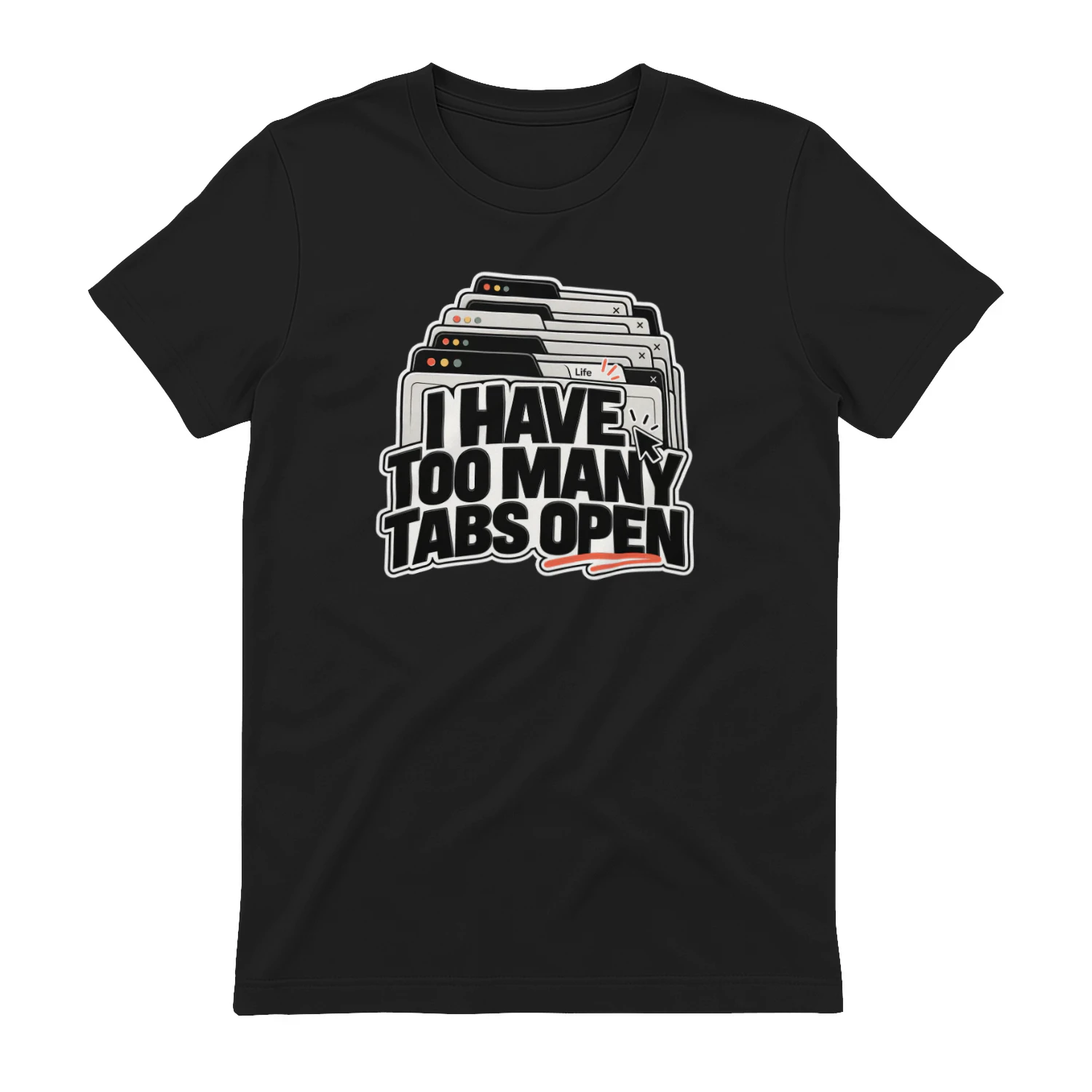
I Have Too Many Tabs Open
A clean browser-inspired design for anyone whose tab bar has become a personality trait. “I Have Too Many Tabs Open” mixes digital-life humor with a buried little “Life” tab for creators, multitaskers, researchers, and anyone who refuses to close anything just in case.
Cerri
Project and work-management software for teams that need clearer planning, ownership and delivery workflows.