

Mode breakdown
The reporting problem AI creates, not just solves
Dara Denney’s latest AI update starts with a contradiction that will feel familiar to anyone who has tried to turn machine output into client-ready thinking: the tools are speeding things up, but they are also making the work more demanding. In the video, Denney points to a creative strategist friend who charges $8,000 for a creative audit and says AI has made those reports take two to three times longer to complete. The reason is not difficulty in the old sense. It is volume. There are more insights to evaluate, more data to reconcile, and more “fascinating” details that may or may not belong in the final hypothesis.
That is the real frame for the rest of her examples. Denney is not presenting AI as a clean replacement for analysis. She is showing how it changes the shape of the analysis. The best outcome is not fewer decisions. It is better decisions with less repetition around them.
Where ChatGPT and Claude fit in a working media team
Denney says she has reached a better place in her AI journey recently, and the use cases she names are mostly about removing friction from routine work. ChatGPT, through its newer Work and Codex experience, has let her mostly automate creative reporting deck creation. She says a process that used to take hours can now be reduced dramatically. That matters because deck-making is often less about original thinking than about assembling the same evidence into the right structure. If the structure can be automated, the strategist can spend more time on interpretation.
Claude is playing a different role in her workflow. Denney describes a set of automations that behave like always-on assistants: a watchdog report that pings her about missed Slack messages, a morning briefing that drafts emails and Slack replies for anything she still has outstanding, and a content idea generator built from her Granola notes. The common thread is not novelty. It is triage. These systems are helping her catch what would otherwise slip through the cracks and turning scattered inputs into something closer to a daily operating system.
That use case is easy to miss if AI gets discussed only as a writing tool. In Denney’s hands, it is really an attention-management tool. It helps decide what deserves a response, what needs a draft, and what can be pushed into a structured report.
Why Runneth stands out for ad and brand research
The most specific part of Denney’s video is her use of Motion’s Runneth tool, which she says her team is obsessed with. She gives several examples, but the important part is the kind of work she is asking it to do. When onboarding a new brand, she wants fast answers to narrow questions: Has this brand run ads in Spanish before? Has it tested EGC? Has it tried a certain creator? Has the audience mix in the ads lined up with the age breakdown she expects?
Those questions sound small, but they matter because they help a strategist form a first impression quickly. Denney says she likes using this kind of check as a gut test when building strategy recommendations for a new account. It helps her avoid overcommitting to a theory before she has enough evidence.
What makes Runneth different in her telling is the way it handles source material. Denney contrasts it with other automations that rely mainly on transcripts. Her point is that Runneth can watch videos inside ad libraries, or even uploaded videos, frame by frame. That gives her more confidence in the resulting analysis because the tool is not only reading what was said; it is looking at what was shown. For creative research, that is a meaningful difference. A transcript may capture language, but not visual pacing, composition, or the relationship between the spoken message and the ad itself.
Denney also mentions having Runneth build more substantial research reports, including analysis of IM8’s ad library, with a few days to complete the work and a second pass to verify it. The specific promise here is not speed alone. It is depth with a check built in. She seems to value tools that can take on a complex research job without flattening the nuance out of it.
The kinds of questions AI can answer well
One of the strongest parts of the video is how Denney frames AI around questions rather than outputs. She is not asking the tools to give her a generic summary. She is asking for yes-or-no checks, subgroup analysis, comparison reports, and explanations for performance changes.
That includes practical onboarding questions, like whether a brand has ever run in Spanish or tested a particular format. It also includes persona analysis across a batch of organic creatives, where she wants to know who the ads are really targeting and what subgroups sit inside a broader persona bucket. Denney suggests that this can surface new audiences to speak to, not just confirm what a website or past creative tests already suggested.
She also points to comparison reporting against other agencies and a dashboard view of that work. And when performance dips, she wants the tool to help explain why: fatigue, comment quality, or a weaker CTR or CPM. In other words, the model is useful when the question is specific and grounded in account reality.
Denney is also clear about what her main metric is not. She says her team does not go by ROAS; they focus on CPA and spend as the core truth of the account. That is a helpful constraint because it keeps the AI use case tied to the business problem the team is actually trying to solve.
What this workflow says about creative audits now
The broader lesson in Denney’s video is that AI is maturing from a novelty into an operations layer. It is helping with deck production, message monitoring, briefing, research, and quick validation. But it is also making skilled strategic work harder to compress into a simple report, because the tools can surface far more signals than a human used to have to gather manually.
That is probably the most useful takeaway for marketers and strategists watching this space. The goal is not to make every task disappear. It is to move the repetitive parts out of the way so the hard questions get better answers. In Denney’s workflow, AI is strongest when it is used to reduce blank-page time, check obvious blind spots, and organize the evidence before a strategist starts making a call.
The tradeoff is clear: the more capable the tools become, the more disciplined the analyst has to be about what actually belongs in the final recommendation. Denney’s example suggests that’s where the real value now sits.
Recommended next
Products & tools
One Mode Digital Media product and one relevant affiliate recommendation selected for this page.
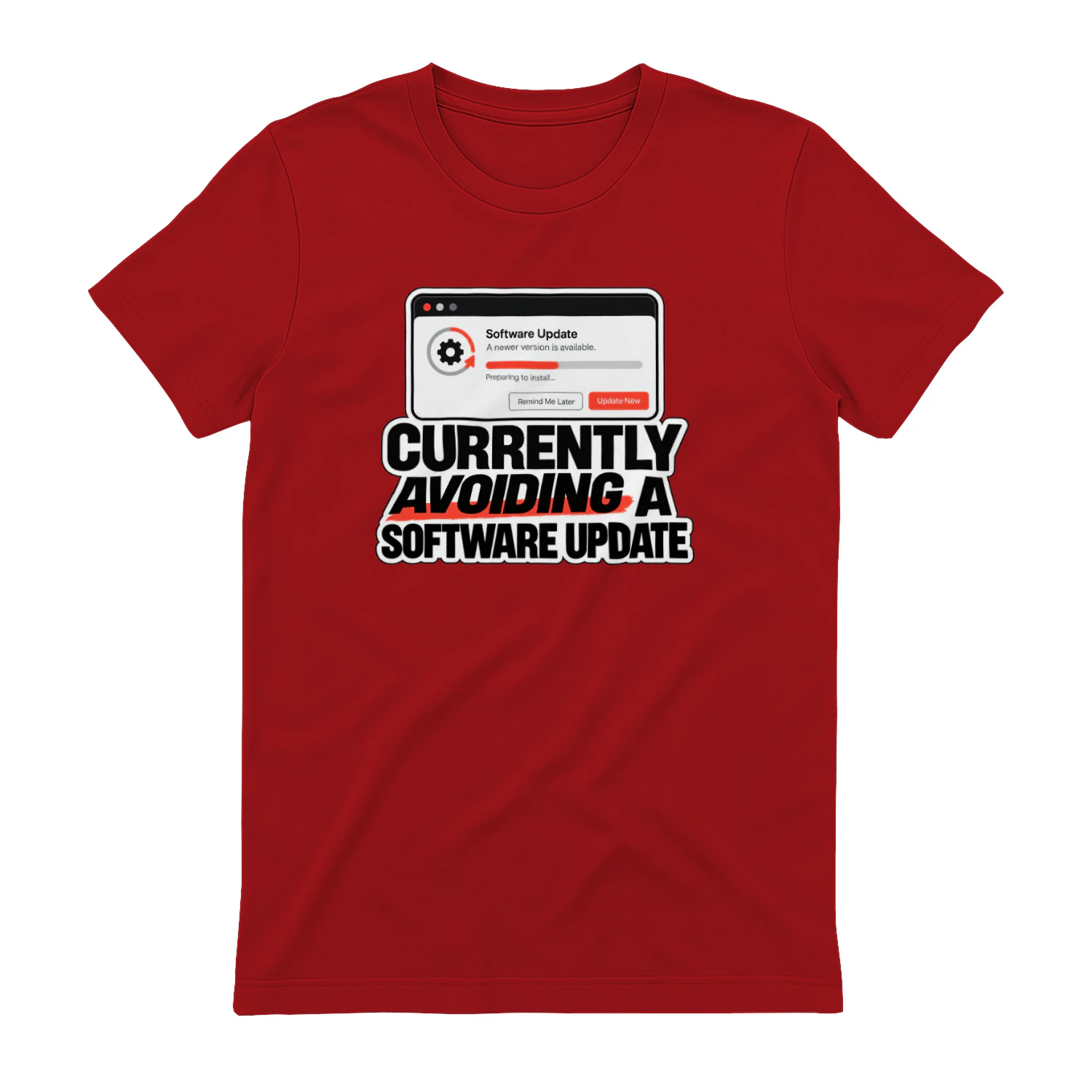
Currently Avoiding a Software Update
A minimalist system-alert design for anyone who has clicked “Remind Me Later” more times than they can count. “Currently Avoiding a Software Update” turns a universal tech habit into clean, wearable humor for computer users, creators, and professional procrastinators.
Diginius
Marketing reporting and paid-media management tools for teams that need clearer campaign visibility and performance workflows.