
Why this weekend matters for visitors deciding where to spend their time
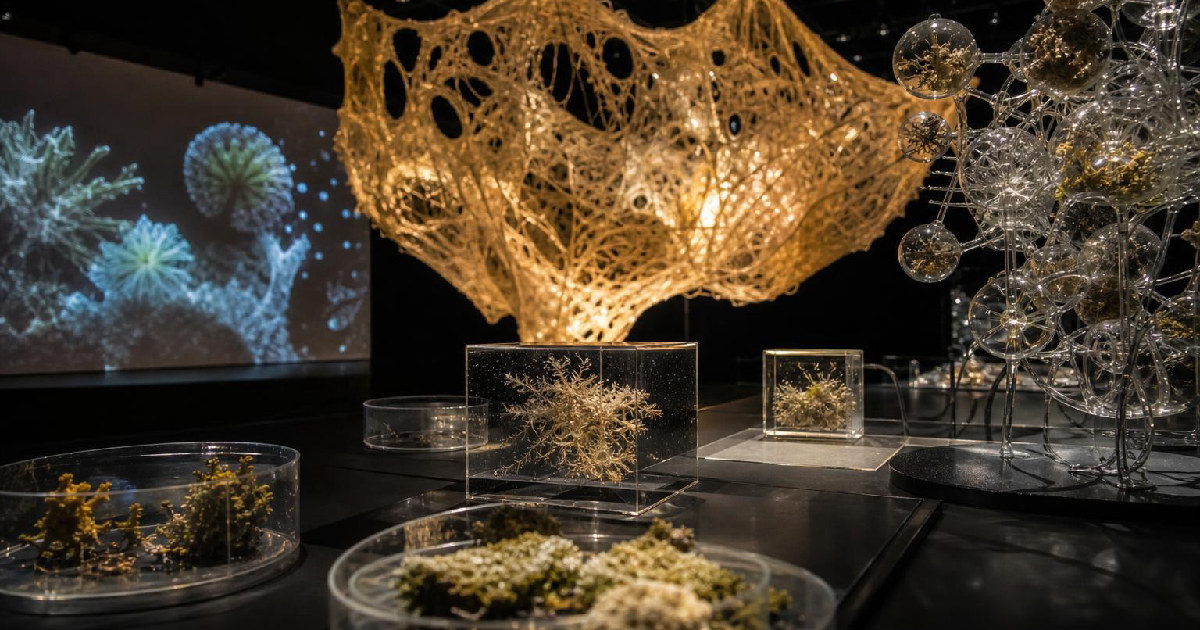
Southbank Centre’s inaugural Creative Intelligence weekend is not framed as a tech demo for its own sake. Google’s own preview describes it as a place where artists, digital innovation and AI are reshaping the world we live in, and the setup is intentionally public-facing: visitors can encounter interactive experiments in the Royal Festival Hall’s Clore Ballroom and Exploration Bazaar, or explore the same ideas online through Google Arts & Culture. Source
For readers trying to understand what an event like this is actually offering, the key point is the mix of formats. It is not only a lecture series and not only a gallery presentation. The weekend combines hands-on experiments, artist presentations and workshop-style activity, all under a broader question that runs through the source material: how can institutions work with artists to innovate with technology while still celebrating human creative agency? Source
Xin Liu: art, science and ecology in one residency frame
One of the clearest individual signals in the weekend’s lineup is Xin Liu. Google separately describes Liu’s upcoming residency with the LAS Art Foundation and Google Arts & Culture as engaging with art, science and ecology. That matters because it places the work in a set of overlapping disciplines rather than treating AI as a standalone theme. Source
The source says Liu explores these ideas through a performance lecture, which is a useful clue for the kind of audience the event is trying to serve. A performance lecture can bridge explanation and expression: it can carry conceptual material without reducing it to a presentation slide. In a weekend organized around creative intelligence, that format suggests that the discussion is part of the artwork, not a separate layer added afterward. Source
That framing also helps readers decide what to expect from Liu’s presence in the program. The emphasis is not on a finished product demonstrating a single tool. It is on a practice that links scientific thinking, ecological questions and artistic methods, with AI as one part of a wider inquiry rather than the only subject in view. Source
Alexandra Daisy Ginsberg: when algorithms are used for non-human outcomes
Another artist in the weekend lineup, Alexandra Daisy Ginsberg, offers a different but related perspective. The source describes her work Pollinator Pathmaker as an algorithmic garden designed for pollinating insects rather than human taste. That detail is easy to overlook, but it is central to why the work belongs in a conversation about AI and creative agency. Source
Instead of using an algorithm to optimize for spectacle, the work uses computation to make design decisions in service of another species. That turns the usual “AI for convenience” idea on its head. The source also notes that Google Arts & Culture was an early supporter of the work, which places it within a longer relationship between the artist and the platform rather than treating it as a one-off feature for the weekend. Source
For visitors, the practical takeaway is that the event is not only asking whether AI can make art. It is also asking what values get embedded into computational tools when artists use them to design environments, reshape attention or support non-human life. That is a different and more specific question, and the source makes room for it. Source
The public experiments make the theme easier to read
The broader weekend includes four interactive experiments from the Arts & Culture Lab, and each one translates a technical idea into a more accessible public encounter. The source points to Dreaming with Flamingos by Yinka Ilori, which uses Lyria, Google DeepMind’s AI music generation tool, in an interactive riddle quest. It also includes Splash Canvas by David Li, where Gemini and fluid dynamics power squishy sea creatures that act as paintbrushes and real-time art critics. Source
Two other experiments make the educational angle even more explicit. Learn Everything uses Gemini to turn photos of everyday objects into visual metaphors for complex topics, while Say What You See is a puzzle game focused on prompt literacy by reverse-engineering AI imagery. Taken together, those pieces show that the weekend is not treating AI as a single aesthetic style. It is treating AI as a set of tools that can be used for music, image-making, learning and prompting. Source
That breadth helps explain why the event is built for both in-person and online exploration. Someone who comes for a live experience can move from garden logic to image logic to music logic without leaving the same public site. Someone who stays remote can still engage with the experiments through Google Arts & Culture. The source presents that structure as part of the event’s design, not a backup plan. Source
What the lineup suggests about creative intelligence now
The strongest thread across the source is not that artists are simply adopting AI. It is that artists are using AI to test different ideas about agency. Xin Liu’s residency is framed around art, science and ecology. Alexandra Daisy Ginsberg’s work places algorithmic design in service of pollinating insects. The interactive lab experiments then extend that same impulse into music, image puzzles and visual metaphor. Source
For readers deciding whether this is worth following, that combination matters. It suggests a weekend that is less interested in proving AI can do everything and more interested in asking what artists can make AI do when the goal is learning, rethinking or rebalancing a system. That makes the program useful not only as an event listing, but as a compact snapshot of how cultural institutions are trying to host the technology debate in public. Source
The event runs from Friday 11 September to Sunday 13 September 2026 at the Southbank Centre, with online access through Google Arts & Culture. For audiences interested in the meeting point of art, science and AI, the appeal is not a single headline act. It is the way the weekend puts two distinct artistic perspectives—Liu’s cross-disciplinary residency and Ginsberg’s algorithmic ecology—into the same room as playful public experiments. Source
Recommended next
Products & tools
One Mode Digital Media product and one relevant affiliate recommendation selected for this page.

This Meeting Could Have Been an Email
A clean corporate-style design for the universal workplace thought: “This Meeting Could Have Been an Email.” Styled like a calendar invite, it’s perfect for remote workers, office teams, marketers, developers, and anyone who values fewer meetings and more actual work.
Envato Elements
Templates, graphics, video, audio and design assets in one subscription.
Original source
Mode adds independent editorial context while preserving a clear path to the original source behind this story.
View original source ↗