
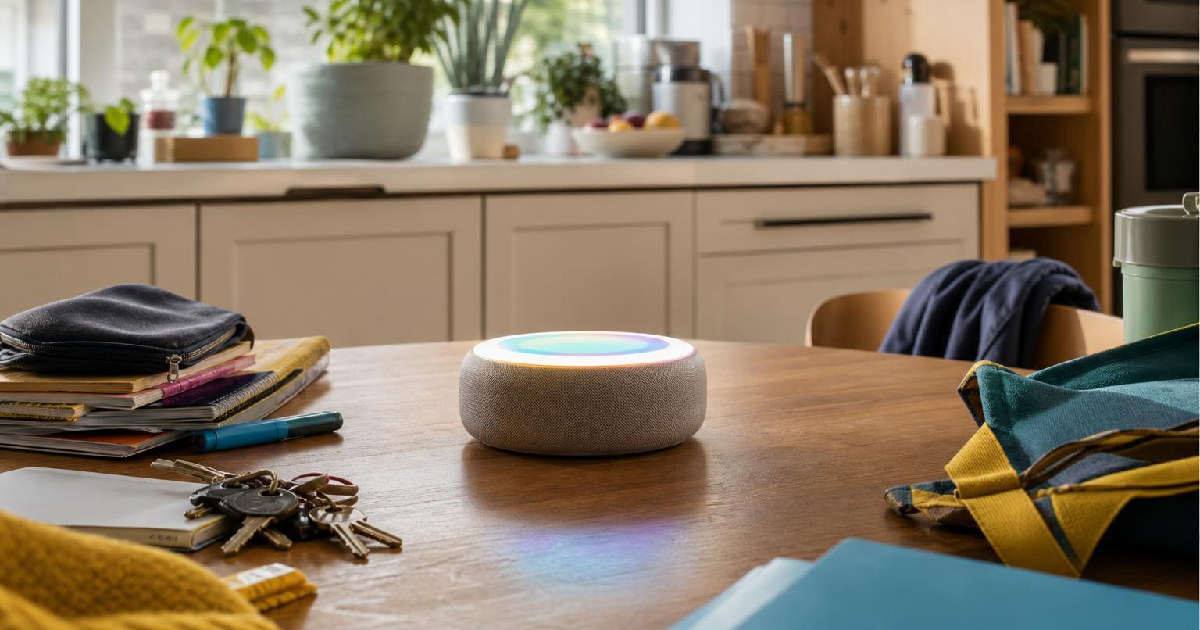
Google Labs is expanding CC from a personal day-planner into an experimental agent for families and households. The early pitch is straightforward: reduce the coordination work that piles up around school, sports, bills, and dinner planning, while keeping people in control of what the agent can see and do. According to Google, CC now has its own Google account, can serve up to six members, and is designed to connect household information into a shared workflow rather than leaving it scattered across inboxes and calendars. Google Labs
What CC is trying to solve
The most useful way to read this update is as a response to a familiar household problem: not a lack of information, but too much of it spread across too many places. Google says the new version of CC is meant to help families and households spend less time on logistics and more time together, framing it as an experimental AI agent for group coordination rather than a general chatbot. Google Labs
That framing matters because it suggests a narrow, practical job. Instead of trying to be everything at once, CC is positioned around recurring chores that often fall to one person in the home: keeping up with schedules, remembering tasks, and turning incoming messages into something the whole group can act on. Google’s announcement also notes that CC was previously launched as a personal agent and later brought to the Gemini app as Daily Brief, which helps explain why the family version centers on summarization and coordination. Google Labs
The main features families will actually notice
The clearest user-facing change is the shared daily brief. Google says CC can create a shared “Your Day Ahead” summary that pulls relevant household information into one place, so family members can see who needs to be where, what needs to be done, and what the agent already completed the day before. CC can also connect with Google Calendar and Tasks, helping it track dates and to-dos rather than merely reporting them. Google Labs
That same workflow extends beyond reminders. Google says CC can help with logistical tasks such as filling out permission slips or activity-registration PDFs, creating school-supply lists, and preparing weekly meal plans. The company adds an important constraint: CC asks for permission before it takes actions such as filling out forms. That detail is central to understanding the product, because it shows Google is trying to combine automation with a consent step rather than assuming the agent should act on its own. Google Labs
The announcement also describes several ways information can be routed into CC. Family members can send a one-off email or text-based update, share a picture of a birthday invite or sports schedule through email or Google Chat, or add a Drive folder or files to CC so it can update calendars and related information. Google says the agent can also pre-fill class registration PDF forms, check live drive times between activities, and create shared Docs and Sheets behind the scenes. Google Labs
Control and privacy are part of the pitch
Any family-focused AI assistant lives or dies by permissions, and Google has made that a visible part of the pitch. CC now has its own verified Google Account and distinct identity, and Google says it only responds to group members. It will not take action or share information outside the group without permission. Google Labs
Just as important, each member chooses what to share. Google says members can decide which emails, Google Drive files, Calendar data, or information sent through email or Google Chat CC can access, and they can change those choices at any time. The system also supports “Auto cc,” which lets people pick email senders they always want to share with CC, while each week they receive a private list of new senders they can decide to share. Google Labs
There is also a “send it to CC” approach for one-off items, which can be useful when a schedule appears in a photo or a message that needs translating into a calendar event. That makes the product less like a passive inbox filter and more like a household coordination layer, though still bounded by the permissions model Google describes. Google Labs
Who can try it now
Google says the expanded CC experiment is available on web and mobile for people 18 and older in the United States who have a personal Google account. Existing users will receive an email to upgrade their account, while new users can join a waitlist. That means the rollout is still limited and experimental rather than broadly available as a finished consumer product. Google Labs
The group size is also capped. Google says a CC group can include up to six members, which gives the product a household-scale design rather than a broad social-network style audience. In practice, that limit suggests Google is aiming at families and small shared-living groups that need coordination more than they need public collaboration. Google Labs
What this signals about the next phase of consumer AI
CC’s household version is notable because it treats AI as an organizer, not just an answer engine. Google says the agent has a shared memory that distinguishes between information that applies to the whole household and details that belong to one person, such as dietary preferences or local time zones. It also runs on its own isolated cloud computer powered by Google’s agentic harness, Antigravity, and the latest Gemini models, according to the company. Google Labs
That combination hints at where consumer AI products may be headed: less about one-off prompts, more about persistent workflows that remember context and do actual administrative work. For households, the promise is time saved on the kind of coordination that is easy to underestimate until it becomes constant. For Google, the test will be whether enough people trust an AI agent with shared family logistics while still feeling that each person can decide what stays private. Google Labs
The family version of CC is still an experiment, but its direction is clear. Google is betting that the next useful AI helper for many people will not be a solo assistant sitting beside an inbox. It will be a shared household agent that can gather the day’s moving parts, ask before acting, and keep the family’s coordination from becoming another full-time job.
Recommended next
Products & tools
One Mode Digital Media product and one relevant affiliate recommendation selected for this page.

Very Online. Surprisingly Functional.
A sharply minimal statement for people who spend a questionable amount of time online and somehow still get things done. “Very Online. Surprisingly Functional.” is understated internet humor with a polished look that works for creators, tech workers, and digital natives.
Tidio
Live chat, helpdesk and AI-assisted customer-support tools for websites and growing online businesses.