
The canvas is becoming programmable
Figma’s new generative plugins and shaders are interesting because they change who gets to invent the tool. Instead of waiting for Figma to ship a feature that solves a narrow workflow, designers can create custom generative behavior directly on the canvas and share what they build.
That pushes Figma closer to a programmable creative environment. The important question is no longer only what the app can do out of the box, but how far a team can shape the app around its own process.
Why generative plugins are different
Traditional plugins extend an application, but generative plugins can be designed around a specific creative need: producing layouts, exploring visual systems, creating effects, or automating repetitive design moves. Figma’s own explanation emphasizes giving designers a way to create the tools they need when they need them.
For teams, that can reduce the gap between an idea for a workflow and the engineering effort normally required to build it.
Where shaders fit
Shaders add another layer of expressiveness by letting designers create visual effects that would normally require specialized tools or code outside the design file. That matters for interactive brand work, experimentation, motion-adjacent design, and teams trying to keep more creative exploration in one environment.
What teams can build with this
The strongest use cases will probably be internal. A design system team could build a generator that respects brand constraints. A product team could make a tool for repeated layout patterns. A creative studio could package a distinctive visual effect instead of recreating it manually.
The benefit is consistency as much as speed. A custom tool can encode a decision once and let more people reproduce it.
The governance question
More flexible tooling also creates a new problem: every team can now create more tools. That means naming, documentation, versioning, ownership, and quality control become important quickly.
The best design organizations will not simply build the most generative plugins. They will decide which custom tools deserve to become part of the shared workflow and which experiments should stay experiments.
Figma’s direction is clear: design software is becoming less fixed. For creators and teams, the opportunity is learning when a custom tool is worth maintaining instead of reaching for another one-off shortcut.
Generative plugins change the design-tool boundary
Figma's plugin ecosystem has always let teams extend the product, but generative plugins push that idea further because the extension itself can become dynamic. Instead of installing a tool that performs one fixed action, a designer may be able to describe the utility needed for a specific project and create a narrower tool around that job.
The opportunity is not to generate more decorative experiments. It is to remove repetitive project friction. A design team could create a helper for naming, layout cleanup, component documentation, content population, handoff preparation, or another task that is specific enough that a general-purpose plugin would be overkill.
That also changes how teams should evaluate plugins. A generated tool still needs predictable behavior, clear permissions, and an understandable output. If a plugin touches shared libraries or production design systems, the team should test it on a copy before trusting it with the source of truth.
For individual creators, this could make Figma more adaptable without requiring a full development project every time a workflow feels awkward. For larger teams, governance becomes just as important as capability. The more easily people can create custom tools, the more important it is to know which ones are approved, maintained, and safe to use on shared work.
The interesting future is not a marketplace with infinitely more plugins. It is a design environment where small utilities can be created close to the problem and discarded when the problem disappears.
Custom tools still need ownership
Teams should decide who owns a generated plugin after the first successful use. Someone needs to know why it exists, what assumptions it makes, and when it should be retired. That lightweight governance prevents a useful one-off tool from becoming an undocumented dependency inside an important design process.
That ownership discipline is what turns a clever generated plugin into a dependable part of the design process rather than another invisible dependency.
Recommended next
Products & tools
One Mode Digital Media product and one relevant affiliate recommendation selected for this page.
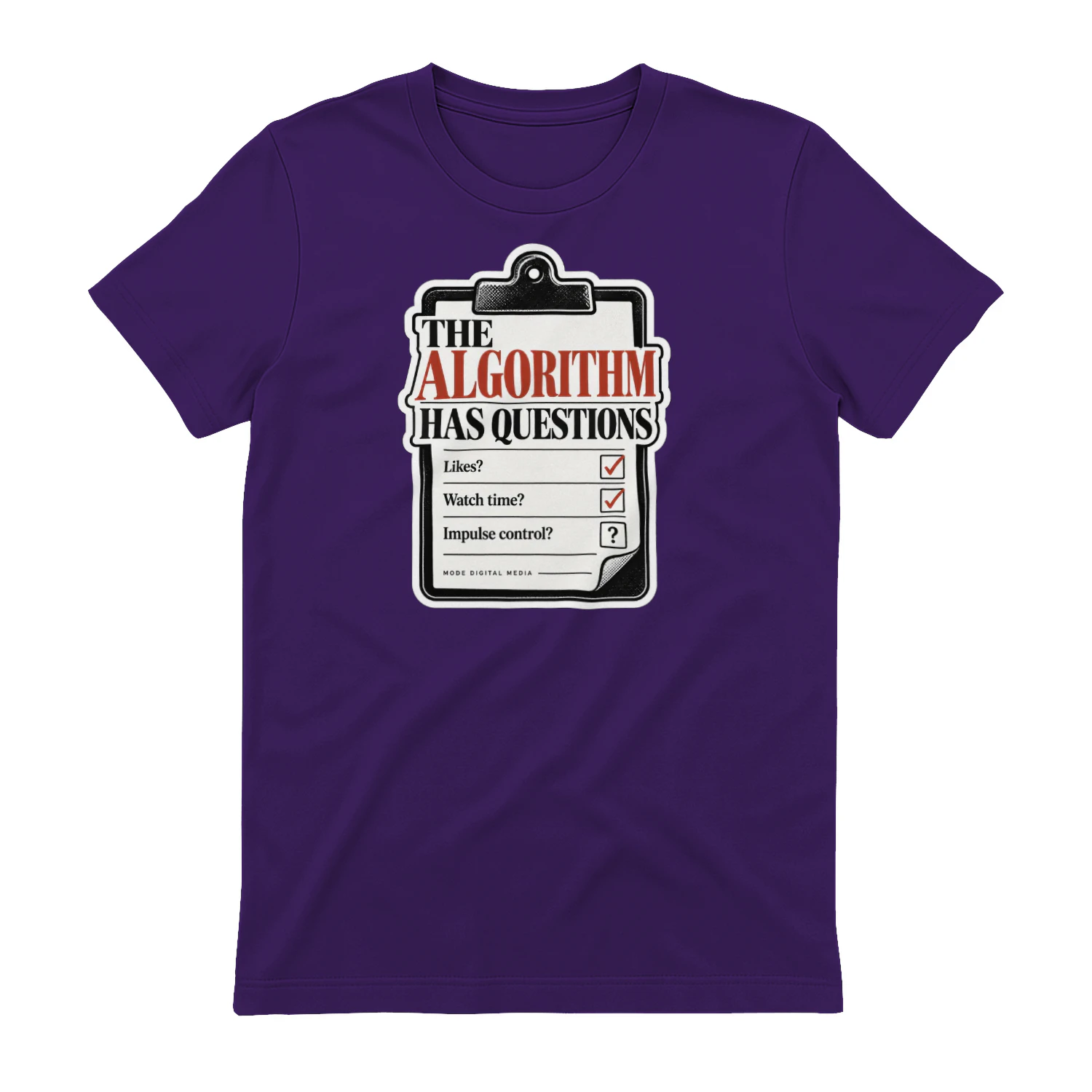
The Algorithm Has Questions
A clean questionnaire-style design imagining the algorithm conducting its own little interview. With likes, watch time, and impulse control on the checklist, “The Algorithm Has Questions” is made for creators, social-media users, marketers, and feed dwellers.
Envato Elements
Templates, graphics, video, audio and design assets in one subscription.
Original source
Mode adds independent editorial context while preserving a clear path to the original source behind this story.
View original source ↗